
The Quick Version
Land for sale in Blue Ridge, GA carries a due-diligence list that built homes never see. Photos reveal nothing about soil, water supply, legal access, or where the national forest boundary runs. Those four questions, not the view, decide whether a parcel is buildable. Each is answerable before you close.
- Chattahoochee National Forest covers 42.6% of Fannin County, 105,450 acres that will never be subdivided, which is why private land here stays scarce.
- A septic construction permit comes from the county Board of Health after a soil and site evaluation. Slow-draining terrain can render a lot unbuildable, so make your offer contingent on it.
- A third of county-maintained road miles are gravel, and state law bars officials from touching private ones. Confirm which kind serves your lot.
- Wells must be drilled by a licensed contractor; afterward, testing the water is only recommended. Quality stays the owner’s job.
Shopping for land or lots for sale in Blue Ridge, GA is a different sport from purchasing a cabin. A finished home has already answered the hard questions: the septic exists, the well produces, the driveway connects to something. Raw land answers none of them, and in an unzoned county with 150 miles of public gravel road, the answers vary tract by tract. Here are the checks, in the order I run them with land buyers.
Why is buildable land around Blue Ridge scarce?
Because nearly half of it may never be developed. The Chattahoochee National Forest holds 105,450 acres locally, 42.6% of Fannin County’s territory, in the Forest Service’s FY2025 report. Around Blue Ridge Lake the effect is even stronger: roughly 80% of the shoreline is national forest under TVA’s plan. Every acre of it is permanently off the market.
Demand presses against that fixed supply from one direction. Seasonal homes account for 27.1% of the housing in Fannin County, fourteen times the share statewide (Census, 2019 to 2023). The buyer pool for a wooded lot therefore reaches far beyond the 25,854 residents. Good parcels with deeded access and workable soil move; landlocked or unbuildable tracts sit. For the full market picture, the guide to buying a cabin in Blue Ridge covers the built side of the same equation.
What does “no zoning” in Fannin County mean for a land buyer?
It means the county will not tell you what to build, and it will not tell your neighbor either. The Fannin County Development Authority puts it plainly: there is “no zoning in the unincorporated areas of Fannin County,” nor in McCaysville or Morganton. Only the City of Blue Ridge zones its parcels, and 89% of the population lives outside city limits.
Unzoned does not mean unregulated. The Land Development Ordinance (2024-15) still governs platting, erosion control, and street standards, and the health rules covered below apply everywhere. What no zoning removes is use control. The pasture beside your lot could become a wedding venue, a wood yard, or a row of rental cabins, and nobody will ask your opinion first. The only private protection is a recorded covenant or property owners association, so read subdivision documents as carefully as the deed.
What is a perc test, and why should your contract depend on one?
A percolation test measures how fast water drains through the ground, in minutes per inch, and it stands between every raw lot and a septic permit. Almost no rural Fannin parcel has sewer service, so the site treats its own wastewater. Georgia’s on-site sewage rules (DPH Chapter 511-3-1) put the county Board of Health in charge of saying yes. A construction permit issues only after an inspection covering absorption rates, soil characteristics, groundwater, and rock.
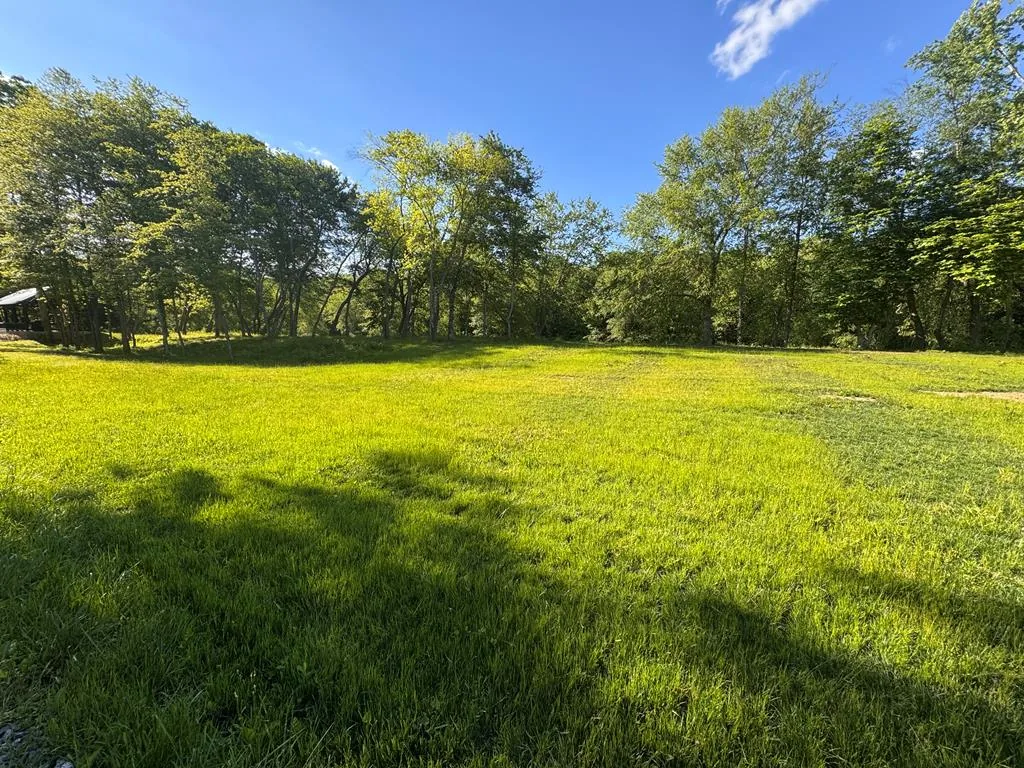
The numbers in those rules shape what you can build and where. On tracts of three acres or more, a conventional septic system is allowed where the percolation rate is 120 minutes per inch or better. Slower ground is deemed unsuitable unless a special study by a certified soil classifier, paired with an engineered design, overcomes the limitation. Evaluations must come from professionals the state certifies, each carrying at least $1 million in liability insurance. And the permit, once issued, stays valid for twelve months.
| Rule | The number | Why a land buyer cares |
|---|---|---|
| Percolation threshold, conventional system (tracts of 3+ acres) | 120 minutes per inch | Slower soil needs an engineered system or fails outright. |
| Septic tank capacity | 1,000 gallons for 1 to 4 bedrooms, plus 250 per bedroom above four | The cabin size you plan drives the system size the soil must support. |
| Tank setback from wells and springs | 50 feet | Well and septic must both fit; small lots run out of room. |
| Tank setback from lakes, ponds, and streams | 25 feet | Creek frontage shrinks the buildable envelope. |
| Tank setback from property lines | 10 feet | Odd-shaped parcels lose more usable area than the acreage suggests. |
Three practical consequences follow. First, write the purchase contract contingent on a satisfactory soil evaluation and septic permit, because Georgia requires no point-of-sale inspection and nobody runs this check for you. Second, existing records live with Fannin County Environmental Health (706-632-3024, 344 W. Main Street downtown), which keeps no online lookup. Third, protect an approval once granted. Grading, filling, or landscaping afterward renders it void under the same rules. If the plan is to build, the new-construction guide picks up where the dirt work ends.
How do water and utilities work on raw land in the North Georgia mountains?
Plan on a well unless the parcel touches one of the area’s few water systems. The City of Blue Ridge utility, drawing from the Toccoa River, serves about 2,695 connections. The so-called Fannin County Water Authority is actually six separate small systems, five of which buy their supply, in EPA drinking-water records. Beyond those footprints, homes drink from the ground: the most recent USGS survey (2015, the latest available) put 38.7% of residents on private wells.
Georgia regulates who drills, not what comes out. A well must be installed by a licensed water well contractor, who notifies the county health department before drilling, under the state’s Water Well Standards Act. After that, the state merely recommends testing: bacterial annually, a chemical screening every three years. Nobody mails you results; quality is the owner’s responsibility from the first gallon.
Power and internet deserve identical scrutiny, in writing. Blue Ridge Mountain EMC, the member-owned electric co-op serving the area, has been extending fiber across its territory, but coverage is address-specific. Before closing, get service availability and any line-extension cost for your exact parcel in writing from each utility. A quote is a fact; “the neighbor has it” is not.
Who maintains the road to your lot?
Possibly no one, and Georgia law forbids the county from stepping in. Fannin County maintains 442 road miles, 150 of them gravel, about a third, per Fannin County Public Works. Everything else is private, and O.C.G.A. 32-1-8 leaves no wiggle room, barring any official from authorizing construction or upkeep of a private road. No commissioner may grade your driveway as a favor, even after a washout.
The check takes ten minutes. Commissioners publish an official road list, roughly 675 entries with each road’s asphalt, chip-seal, and gravel mileage. If the route serving your lot appears there, the county maintains it. If not, upkeep belongs to the owners it serves, and you want a recorded road maintenance agreement spelling out who pays and how much.
Access itself demands equal rigor. If the route in crosses anyone else’s property, require a recorded easement with its width and maintenance terms stated. Have the title search confirm it runs with the land. Long use and a friendly wave from the current neighbor are not access. Sellers of landlocked tracts sometimes price them attractively for exactly this reason.
What should you check when land borders national forest?
Where the boundary actually runs, first of all. Forest adjacency is the most durable amenity a parcel in the North Georgia mountains can have, a neighbor that will never build, but painted blazes fade and old fences wander. Order a survey rather than trusting the tax plat, and never assume you can reach the parcel across federal land; access has to come from your deed, not the forest.
Lakefront tracts add two more checks. TVA manages Blue Ridge Lake on a schedule that drops the pool from 1,687 feet in summer to the mid-1,660s by January, a swing of roughly 22 feet, so June waterfront may front mud in winter.
Dock rights come from a TVA Section 26a permit, which dies at closing rather than conveying; buyers get 60 days to file their own application. On creeks and bottomland, remember the governing flood insurance map dates to September 2010. Check the parcel at FEMA’s Map Service Center, because flood coverage is mandatory in a mapped hazard area with a federally backed loan.
Holding costs, at least, run modest. Georgia assesses property at 40% of fair market value. At tax year 2025’s unincorporated millage of 9.073, vacant land costs about 0.363% of its value per year, with no homestead exemption since nobody lives there. If what you actually want is acreage with a house already on it, that is a different search with different diligence; the mountain-view and acreage homes guide covers it.
How does a land buyer put this into practice?
Run the checks in order, cheapest first, and let any failure end the deal before the expensive steps. Confirm recorded access and road status from documents. Then pay for the soil evaluation. Then verify water and utilities in writing. Then survey. Current land and acreage listings across Fannin County appear on the Blue Ridge, GA properties page. My insider’s guide to Blue Ridge shows the area firsthand.
I bought here too. I’m Thomas Echea, and I keep a home in Blue Ridge along with one in Fort Lauderdale. I have watched buyers fall for a ridgeline and skip the soil report, which is why I walk land clients through access, perc, water, and boundary before anyone talks price per acre. Start that conversation here.
Frequently asked questions
Do you need a perc test to build on land in Blue Ridge, GA?
Effectively yes, wherever there is no sewer. Georgia’s on-site sewage rules require a Board of Health construction permit, issued after a soil and site evaluation. On larger tracts a conventional system needs a percolation rate of 120 minutes per inch or better. Slow percolation means an engineered design or an unbuildable lot.
Does no zoning mean you can build anything on Fannin County land?
No zoning board reviews your plans in unincorporated Fannin County, but state septic rules, the local development ordinance, and any recorded covenants still apply. The trade cuts both ways: the same freedom extends to every neighboring parcel, which is why reading subdivision covenants matters here more than in zoned counties.
Who maintains gravel roads in Fannin County?
Everything on the official road list gets public maintenance, roughly 150 gravel miles among 442 total. Private roads get no public help; state statute (O.C.G.A. 32-1-8) keeps officials from maintaining them, so buyers there need a written maintenance agreement among the owners.
How much does land cost in Blue Ridge, GA?
There is no reliable public price index for vacant land here, and asking prices vary enormously with access, soil, water, and view, so treat any per-acre average with suspicion. The honest method is a comparable-sales analysis of recently closed land transactions near the parcel, which I can pull from MLS records.