
The Quick Version
Fannin County’s terrain climbs from roughly 1,460 feet in the river towns to 3,782 feet at Springer Mountain. What a view or a tract of land costs in the North Georgia mountains turns on elevation, access, and infrastructure. Blue Ridge’s 30513 ZIP carried a median asking price of $699,225, or $327 per square foot, as of September 2026. Before any offer on acreage, check the road, the water, the septic permit, and who owns the ground your windows face.
- The Chattahoochee National Forest covers 105,450 of Fannin County’s 247,747 acres, or 42.6%. A view across public forest is the closest thing to a protected view this county offers.
- Unincorporated Fannin County has no zoning, so no county ordinance stops new construction inside a private sightline.
- Of the county’s 442 maintained road miles, 150 are gravel, and Georgia law bars counties from maintaining private roads entirely (O.C.G.A. § 32-1-8).
- Nearly two in five residents relied on private wells in the most recent federal estimate, and Georgia requires no septic inspection when a home changes hands.
Mountain view homes and homes with acreage are the two searches that define buying around Blue Ridge, and they demand a different kind of homework than an in-town cottage. The view gets priced through comps, the land by what you can actually do with it. Both rest on unglamorous details: surface, slope, well depth, septic capacity, treeline. Here is how I read each one before a buyer writes an offer.
What does a mountain view home cost in Blue Ridge, GA?
The median asking price across Blue Ridge’s 30513 ZIP code was $699,225 in September 2026, about $327 per square foot, according to realtor.com’s public research data. Inventory ran to 452 active listings, up 22% year over year, with a median 81 days on market and a median listing size of 2,372 square feet. Countywide, Fannin posted a $699,900 median ask at $323 per square foot across 820 active listings.
| Area | Median asking price | Price per sq ft | Active listings | Median days on market |
|---|---|---|---|---|
| Blue Ridge (ZIP 30513) | $699,225 | $327 | 452 | 81 |
| Fannin County overall | $699,900 | $323 | 820 | 83 |
One number in the same dataset tells the view-and-acreage story better than any brochure: the average asking price in 30513 was $925,483, some $226,000 above the median. Large view estates and big tracts pull the average up that far. No public dataset isolates what a long-range panorama adds by itself. That premium emerges from comp work, parcel by parcel, which is why two cabins of identical size can sit $200,000 apart on the same lane.
Acreage follows working rules rather than published statistics, because no agency tracks per-acre sale prices for the county. In practice, price per acre tends to fall as a tract grows. The buildable acres carry most of the value: gentle slope, road frontage, soil that will pass a perc test. Steep wooded back-acreage buys privacy and a buffer more than it buys resale dollars. Treat any per-acre figure you hear as a starting point for negotiation, not a fact.
How does elevation change the view in the North Georgia mountains?
Downtown Blue Ridge sits at 1,765 feet, and the county’s towns spread across a modest band: McCaysville at 1,460 feet on the Toccoa, Mineral Bluff at 1,563, Morganton at 1,792. The terrain itself climbs far higher, topping out at 3,782 feet on Springer Mountain, the southern terminus of the Appalachian Trail, which stands inside Fannin County.
That vertical spread is the menu. Height buys the layered, long-range ridgeline vista; the valley floors trade it for pasture, creek frontage, and gentler driveways. The costs of altitude are practical ones. Higher parcels in the North Georgia mountains tend to mean steeper grades and more exposure when winter weather moves through. The access question below matters twice as much at 2,800 feet as it does at 1,600.
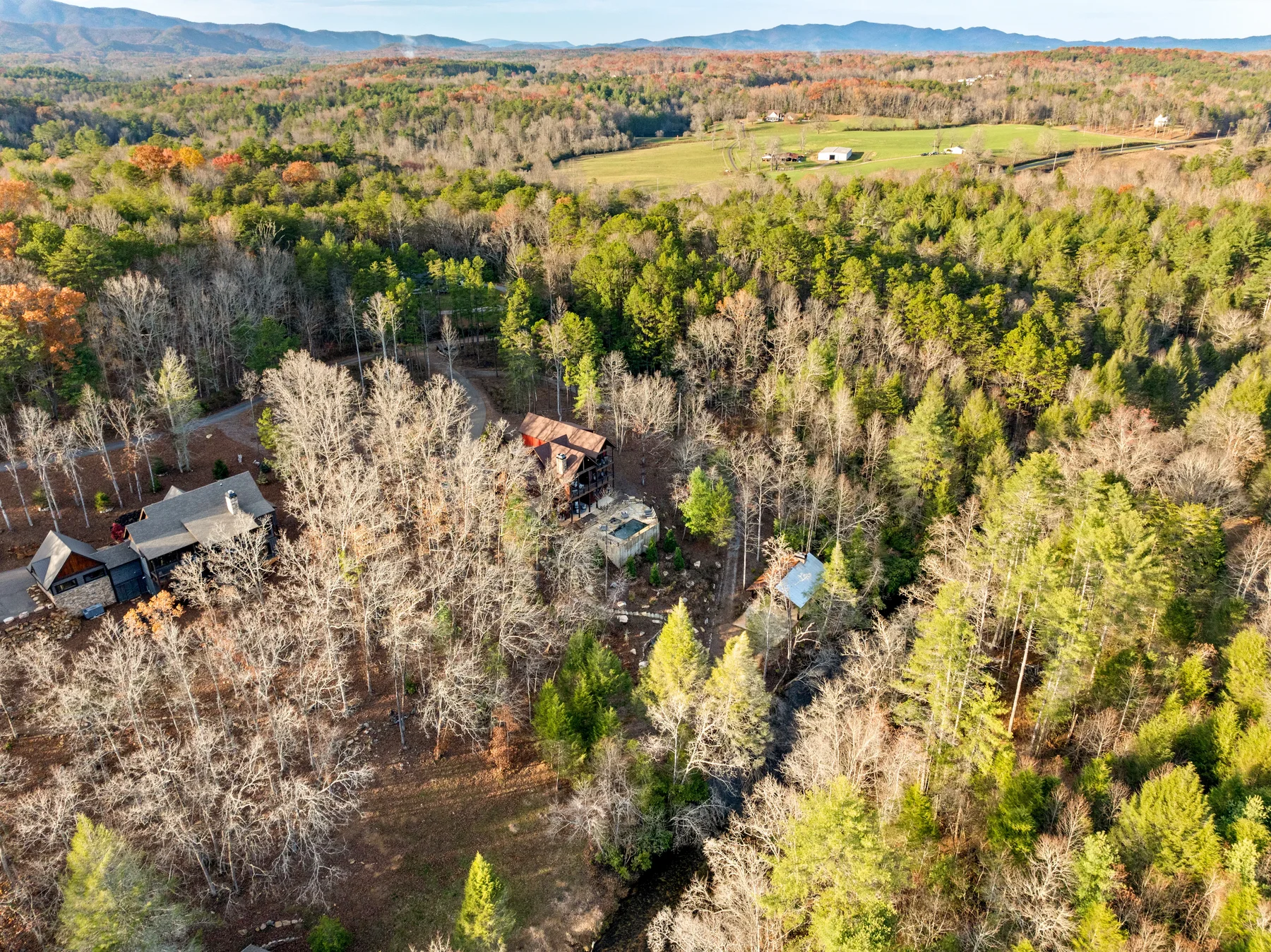
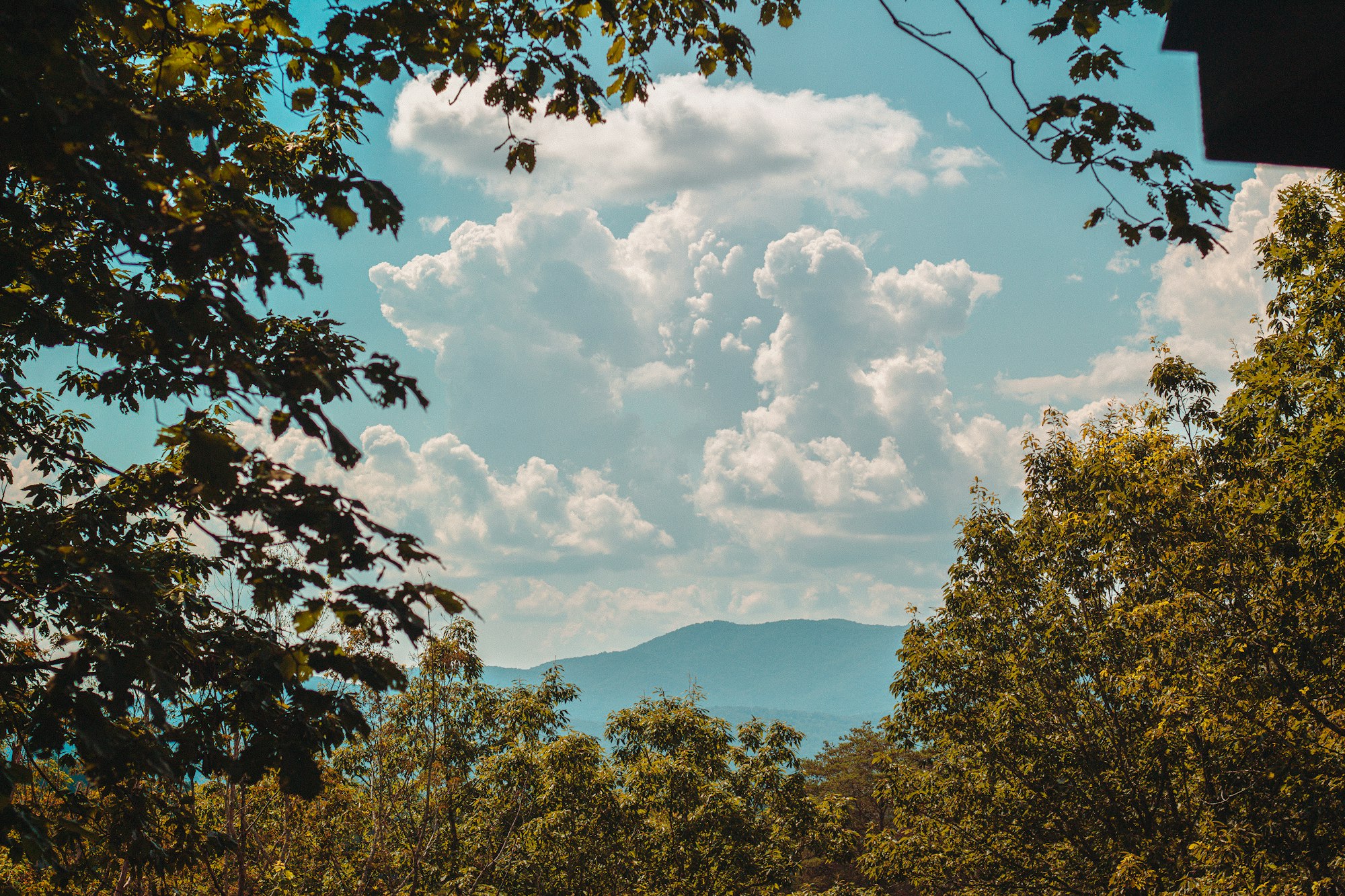
Season matters as much as elevation. A ridgeline that reads wide open in January can close in behind hardwood canopy by late spring. If the outlook is the reason you are buying, walk the property in full leaf. I distrust listing photographs shot from a drone hovering far above the deck rail. Stand where the porch will be. That sightline is the one you are paying for.
Who protects the view after closing?
In unincorporated Fannin County, nobody does by default. There is no zoning, a fact the Fannin County Development Authority states plainly. No ordinance prevents a neighbor from clearing a lot and framing a roofline in the middle of your sightline. The absence cuts both ways, though. The same rulebook leaves you free to add a barn, a workshop, or a guest cabin with far less friction than most metro jurisdictions allow.

Three protections exist in practice. First, own the foreground: buyers who care most about a view often buy the extra acres it crosses, which is one reason view and acreage travel together here. Second, face public land.
With 105,450 acres of Chattahoochee National Forest inside the county, 42.6% of Fannin’s total per the U.S. Forest Service’s FY2025 land report, a view over national forest crosses ground that will not sprout construction. Third, private covenants: in subdivisions that recorded them, those covenants are the only land-use law the parcel has, so read every page before waiving contingencies.
What do gravel roads mean for an acreage purchase?
They mean the maintenance question comes before the survey. Fannin County maintains 442 miles of road, and the surface breakdown from Fannin County Public Works runs 204 miles of asphalt, 87 of chip-and-seal, and 150 of gravel. Roughly one county-maintained mile in three is gravel, so an unpaved approach is normal here, not a defect.
The sharper distinction is public versus private. Fannin publishes an Official Road List (January 2025, roughly 675 entries with per-road surface mileage). If the road serving a listing appears there, the grader and the plow are the county’s job.
If it does not, the route is private, and Georgia law is blunt about what that means. O.C.G.A. § 32-1-8 makes it unlawful for officials to spend public resources building or maintaining a private road. Grading, gravel, and storm cleanup belong to the owners along it, forever.
So I ask three questions before the inspection period ends. Is there a recorded road-maintenance agreement among the owners? Who paid for the last load of gravel, and when? And put the same paperwork in front of your lender early, since financing on a private road can hinge on it.
What should you know about wells and septic on acreage?
Assume both, then verify both. About 39% of Fannin County residents drew water from private wells in the 2015 USGS county estimate, the most recent federal figure available. The Blue Ridge municipal system serves 6,100 people from the Toccoa River, and its reach fades quickly outside town. The farther a parcel sits from the city line, the more likely a drilled well. Order a water-quality test and a flow test during due diligence; neither is expensive against the price of the house.
Septic deserves more suspicion than it usually gets, for one structural reason: Georgia’s on-site sewage code (DPH Chapter 511-3-1) sets no inspection requirement at the point of sale. Nothing in the transaction forces a failing system to reveal itself. The rules also tie tank size to bedrooms, a detail that catches mountain houses in particular.
A 1,000-gallon tank covers one to four bedrooms, each additional bedroom adds 250 gallons, and a garbage disposal raises the requirement by half. A cabin marketed to sleep twelve on a tank permitted for three bedrooms is a real and common mismatch. Later site work can quietly void the original approval too, since grading, fill, decks, and driveways built over a drainfield all count against it.
The permit record lives at Fannin County Environmental Health, 344 West Main Street in Blue Ridge, 706-632-3024. There is no online lookup, so request the file by phone or in person and compare the permitted bedroom count against the listing.
| The check | The local reality | Where to verify |
|---|---|---|
| Road status | 150 of 442 county-maintained miles are gravel; private roads get no county upkeep (O.C.G.A. § 32-1-8) | County Official Road List, January 2025 |
| Water source | 39% of residents on private wells (2015 federal estimate) | Water-quality and flow tests during due diligence |
| Septic capacity | 1,000-gallon tank covers up to four bedrooms; each additional bedroom adds 250 gallons | Fannin Environmental Health, 706-632-3024 (no online records) |
| Sale-time inspection | Georgia rules require no septic inspection when a home sells | Order an independent septic inspection anyway |
How should you start a view-and-acreage search?
Start on the ground, not the portal. Browse current Blue Ridge and North Georgia listings to shortlist, then walk anything serious in person, in leaf, with the road and the water questions already in hand. The Blue Ridge cabin buyer’s guide covers the rest of the stack that applies to any purchase here: rental rules, property taxes, flood maps, dock permits. For the daily-life side of the decision, read about everyday life in Blue Ridge alongside my own guide to the town.
I’m Thomas Echea. I own a home in Blue Ridge and another in Fort Lauderdale, and with E+E Group at Compass I vet acreage listings the way I vet my own purchases: road first, water second, view last. The first two decide whether the third is livable. When a panorama worth keeping shows up, contact me here.
Frequently asked questions
What elevation is Blue Ridge, GA?
Downtown Blue Ridge sits at 1,765 feet. The surrounding towns range from about 1,460 feet in McCaysville to 1,792 in Morganton. Fannin’s terrain rises to 3,782 feet at Springer Mountain, the Appalachian Trail’s southern terminus.
Are the roads to Blue Ridge mountain homes paved?
Often not, and that is normal. Of the 442 road miles Fannin County maintains, 150 are gravel. Private roads receive no public maintenance at all under O.C.G.A. § 32-1-8, so confirm the status against the Official Road List before closing.
Do homes in Blue Ridge, GA use well water?
Many outside town do. Roughly 39% of Fannin residents relied on private wells in the 2015 USGS survey, while the Blue Ridge city system serves 6,100 people from the Toccoa River. Buyers on acreage should order water-quality and flow tests.
Does Georgia require a septic inspection when a home sells?
No. The state’s on-site sewage code sets no such requirement at sale. Order your own inspection, and pull the permit record from Fannin County Environmental Health (706-632-3024) to confirm the tank matches the bedroom count.