
The Quick Version
Epworth is the unincorporated stretch of Highway 5 that sits roughly midway between downtown Blue Ridge and McCaysville. Zillow put the typical home value here at $440,257 in May 2026, the middle rung of Fannin County’s price ladder. Only about one house in eight is a seasonal place. This is the county’s year-round valley.
- Typical home value: $440,257 as of May 2026, per Zillow. Roughly $83,000 below Blue Ridge and $109,000 above McCaysville.
- Just 12.1% of Epworth’s housing stock is seasonal, against 27.1% countywide and 62% in Cherry Log, per Census Bureau surveys. Most neighbors live here all year.
- Fightingtown Creek, designated trout water in the state’s official Trout Capital, drains the valley on its way to the Ocoee River.
- Epworth posts too few sales in any month for its own median to mean much. Price against county data and recent comps, not a headline.
Epworth is what Fannin County looked like before the cabin boom. It is a farm valley with a post office, an elementary school, and a trout stream, minutes from two downtowns without belonging to either. Tourist itineraries skip it entirely, which is precisely why I keep showing it to a certain kind of buyer. Here is where it sits, what it costs, and who it fits.
Where is Epworth, GA?
On Georgia State Route 5, between Blue Ridge to the south and McCaysville on the Tennessee line to the north. That corridor runs about 11 miles and takes around 15 minutes end to end; Epworth lands near the middle of it. Mercier Orchards anchors the southern stretch of the same road at 8660 Blue Ridge Drive. The fourth-generation farm, started by Bill and Adele Mercier in 1943, keeps its market, bakery, winery, and cidery open daily.
The community is old by local standards and modest about it. Its post office opened in 1901. The Georgia General Assembly chartered a “Town of Epworth” in 1906, and the settlement was earlier called Atalla before adopting its current name from Epworth, England, according to census and historical records. The charter faded long ago.
Today this is a census-designated place of 668 residents at the 2020 count, up 39% from 480 a decade before, with its own ZIP code, 30541, at about 1,700 feet of elevation. West Fannin Elementary School serves the west side of the district from 5060 Blue Ridge Drive on the same highway, per federal education data.
What does Epworth real estate cost?
Zillow’s home value index put the typical Epworth house at $440,257 in May 2026. That is the middle of the ladder: cheaper than Blue Ridge, Mineral Bluff, and Morganton, and well above McCaysville. Values across the corridor were flat to slightly down year over year, roughly minus 2% to plus 2%, so nobody should be pricing to a boom.
| Community | Typical home value (Zillow, May 2026) | Seasonal-home share (Census ACS, 2019–23) |
|---|---|---|
| Blue Ridge | $522,872 | 32.3% |
| Mineral Bluff | $516,758 | 22.9% |
| Morganton | $498,188 | 31.3% |
| Cherry Log | $488,454 | 62.0% |
| Epworth | $440,257 | 12.1% |
| McCaysville | $331,403 | 6.0% |
One honest caveat: Epworth-specific sales data is thin. A community of a few hundred households closes only a handful of deals in a given month. A median built on that sample swings for reasons unrelated to demand. Our July 2026 review of county sales at E+E Group found Fannin’s monthly figure lurching between $480,000 and $760,000 across four months, on roughly 65 transactions a month.
Over the twelve months ending May 2026, the countywide median sale worked out to about $607,500, down around 4% from the prior year. Price an Epworth property off that trailing number, the value index above, and street-level comps. Never off a single month.
Why is Epworth the year-round corner of Fannin County?
The numbers say it plainly. Census surveys classify 27.1% of the county’s housing as seasonal, about fourteen times the Georgia average. In Epworth the share is 12.1%. Cherry Log, by contrast, runs 62%. Drive this valley on a Tuesday in February and the porch lights are on.
That changes what ownership feels like. School traffic in the morning. Neighbors who notice a strange truck in your driveway. Houses that do not sit dark eleven weekends out of twelve. Buyers chasing the rental economy have the Blue Ridge cabin market for that; Epworth offers the opposite trade, less postcard, more community. For the practical side of full-time mountain life, see the guide to living in Blue Ridge.
Two rural realities still apply. Unincorporated Fannin County has no zoning, a fact its development authority states outright, so covenants or nothing govern what a neighboring parcel becomes. Many homes run on well and septic, so a water test and septic inspection belong in any offer. The absence of zoning cuts the other way too. Short-term renting is legal countywide with a $225 certificate under the 2025 ordinance, should an owner ever want the option, though few here exercise it.
What is Fightingtown Creek?
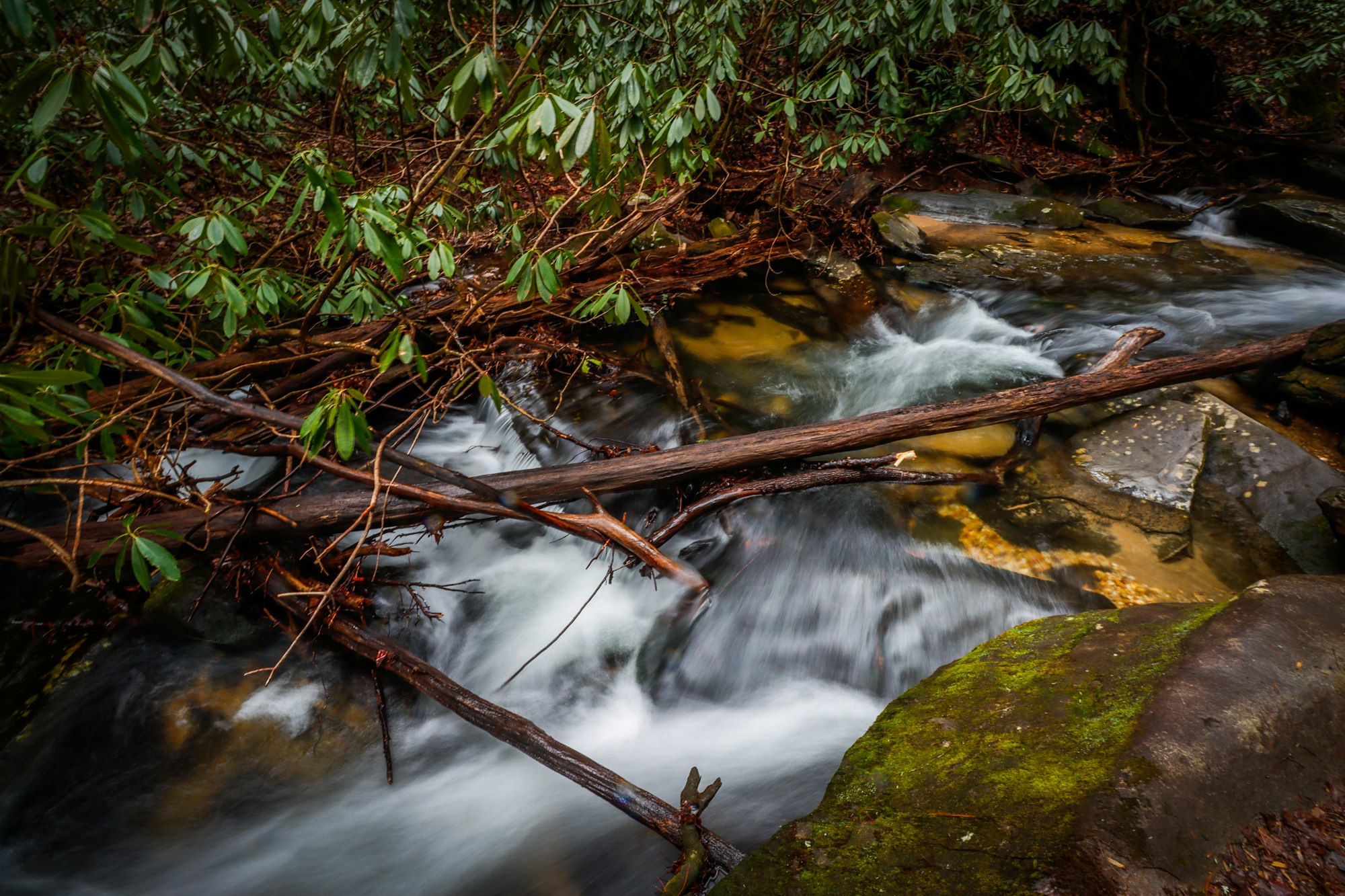
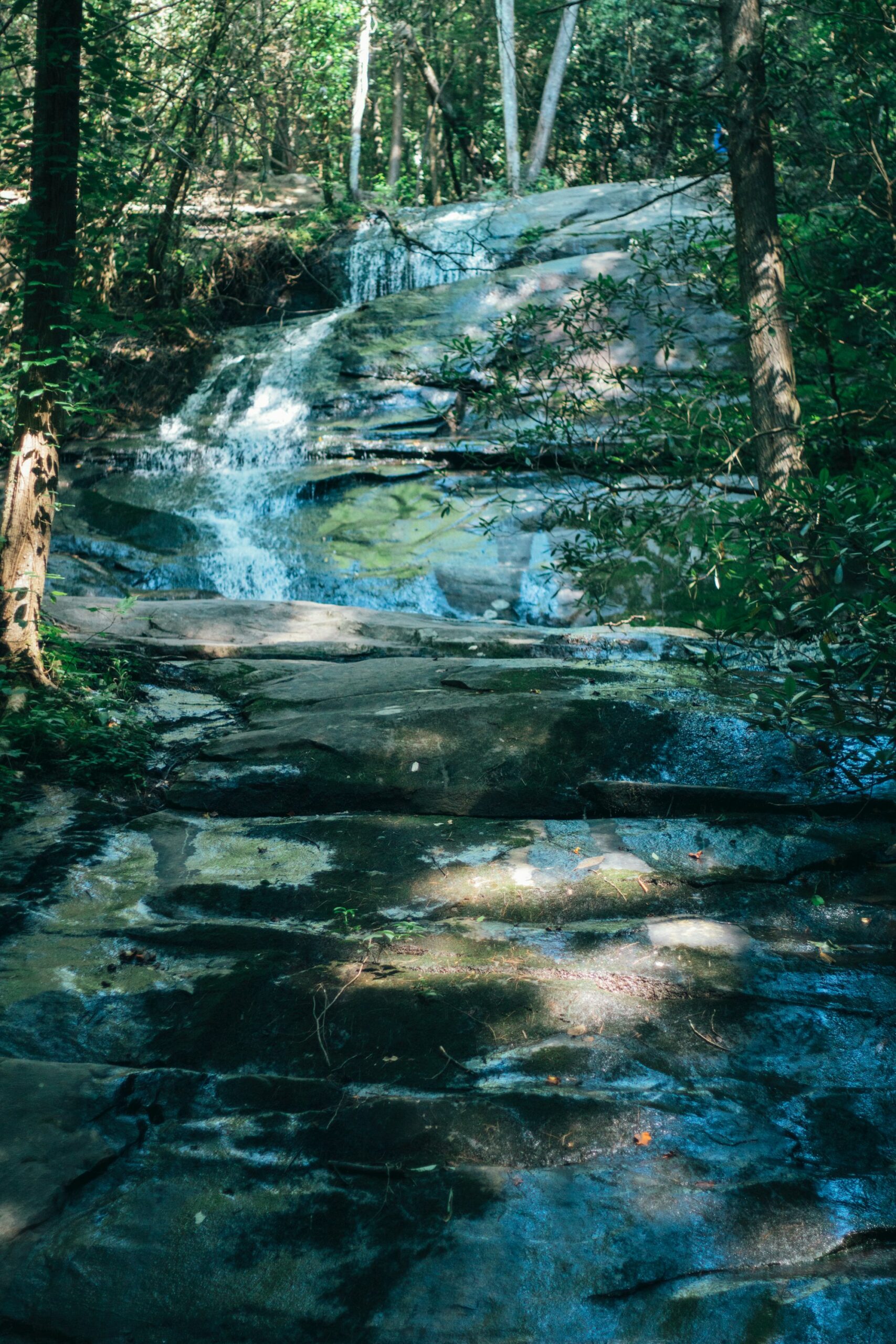
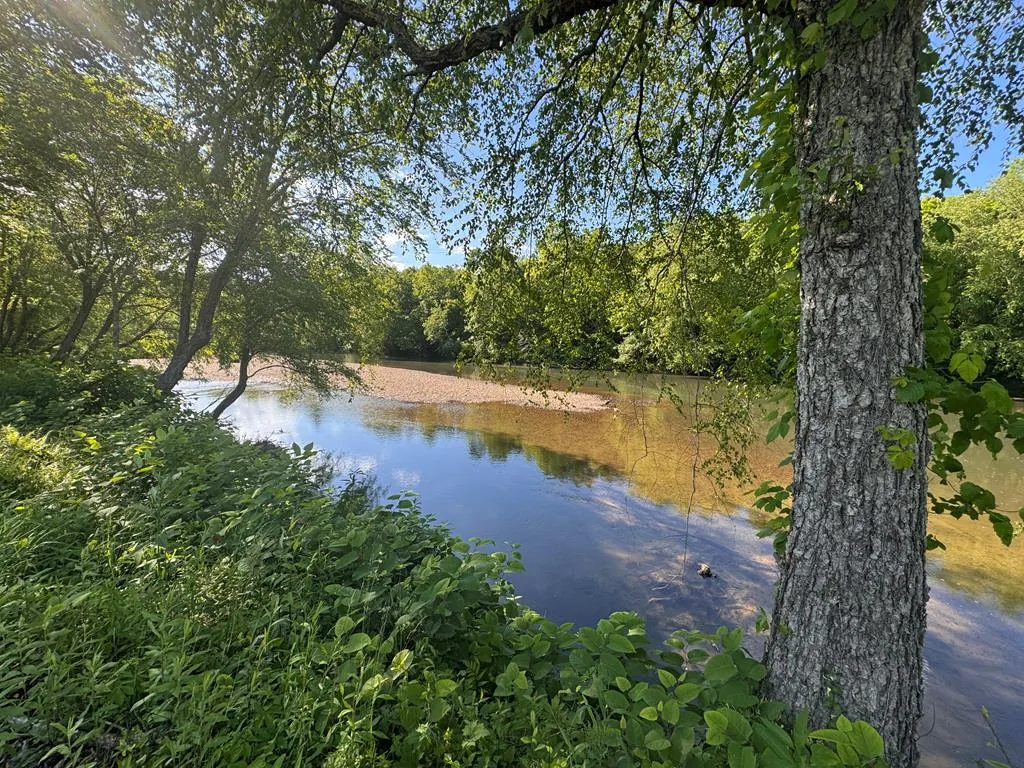
The valley’s signature. Fightingtown Creek rises on the east side of the Cohutta range and winds past Epworth to join the Ocoee River just above McCaysville, where a USGS gauge has tracked it for decades.
Its English name, per the historical record, is an incomplete translation of a Cherokee town that stood on its banks. The state lists the watershed as designated trout water. Fannin itself carries the title of Trout Capital of Georgia by legislative resolution, a point of pride the local chamber never lets visitors forget.
Much of the frontage is private, which is exactly why creek-front parcels trade on quiet competition among people who fish. Public access exists. The Fightingtown Creek Nature Park, 189 acres held by the Southeastern Trust for Parks and Land off Cedar Valley Road, offers 12 miles of free hiking and mountain-bike trails about three miles west of Blue Ridge. Remember that a property with deeded frontage is a different asset from a property near the water. Verify the deed, not the listing photos.
Who should buy in Epworth?
Three buyers, mostly. Full-timers and remote workers who want mountain living with school-run practicality and neighbors in residence. Value-minded second-home shoppers priced out of Blue Ridge proper, who would rather own the middle of the ladder than the bottom of a hotter market. And anglers, for whom the creek is the entire thesis. McCaysville follows its own logic, covered in the McCaysville guide.
For live inventory in town, browse homes for sale in Epworth, GA on my Epworth neighborhood page.
I’m Thomas Echea, and I own a home in Blue Ridge myself. I tend to describe Epworth to clients as the county with the volume turned down: same mountains, same short reach to two downtowns, fewer taillights. To compare the area’s other small communities, start with the towns around Blue Ridge overview. Then browse current listings or contact me for a street-level read on the valley before you offer.
Frequently asked questions
Is Epworth, GA a town?
Not anymore. The Georgia General Assembly chartered a Town of Epworth in 1906, but the charter lapsed. Epworth is now an unincorporated census-designated place in Fannin County, population 668 at the 2020 census, with its own post office, open since 1901, and ZIP code 30541.
How far is Epworth from Blue Ridge?
Epworth sits near the midpoint of the roughly 11-mile Highway 5 corridor between downtown Blue Ridge and McCaysville. Figure a drive of five to ten minutes to either downtown. Mercier Orchards, at the Blue Ridge end of that road, is the corridor’s best-known landmark.
How much does a home in Epworth cost?
Zillow’s index put the typical Epworth home value at $440,257 as of May 2026, below Blue Ridge at $522,872 and above McCaysville at $331,403. Epworth records too few monthly sales for its own median price to be reliable, so lean on county-level data and recent nearby comps.
Can you fish Fightingtown Creek?
Yes. It is state-designated trout water in the county the Georgia legislature named the Trout Capital of Georgia. Much of the frontage is private, so fish public reaches or get the landowner’s permission. The 189-acre Fightingtown Creek Nature Park offers free trails along the watershed; confirm current angling access on site.