

The Quick Version
- What qualifies for a 1031 exchange is decided by use, not building type.
- No five-year holding rule exists. That number comes from Section 121(d)(10), which limits a later home-sale break.
- Acreage, timber, an orchard, a cabin, and a storefront are all like-kind.
- A flip fails. The statute excludes anything held primarily for sale.
- Georgia adds a trap: conservation covenants run ten years, and breaking one generally costs twice the savings.
Last updated August 2026.
Whether something qualifies turns on how you held it. For trades completed after December 31, 2017, only real estate makes the cut at all. Past that single limit, the code weighs use and intent. It names no minimum holding period anywhere.
That surprises owners who arrive certain a five-year clock governs everything. It does not. A different provision produced that number, and confusing the two costs people real deferral.
What qualifies for a 1031 exchange?
Real estate you held for business or investment, traded into more of the same. Section 1031(a)(1) puts it this way: “No gain or loss shall be recognized on the exchange of real property held for productive use in a trade or business or for investment if such real property is exchanged solely for real property of like kind which is to be held either for productive use in a trade or business or for investment.”
That closing clause is the one people skip. It puts the same burden on what you buy as on what you sold. A clean sale into a sloppy purchase collapses just as fast as the reverse.
The Tax Cuts and Jobs Act narrowed everything to real estate for trades completed after December 31, 2017. Equipment, artwork, vehicles, and franchise rights all left that year. Treasury then defined the survivor. Final regulations issued as T.D. 9935 govern exchanges beginning after December 2, 2020, and describe qualifying assets as land, improvements to land, unsevered natural products, and the water and air space above.
Is there a 1031 exchange 5-year rule?
No. Nothing here imposes a five-year hold, a two-year hold, or any fixed span. The figure travels because a genuine five-year clock sits one section away, aimed at a separate question.
Section 121(d)(10) is the origin. It blocks the residence exclusion “during the 5-year period beginning with the date of such acquisition” when a swap produced the house. Those years restrict a downstream benefit. They never gate eligibility.
| What people call “the 5-year rule” | What it governs | Window |
|---|---|---|
| Section 121(d)(10) | Claiming the $250,000 or $500,000 residence exclusion on a swapped-into house | 5 years |
| Section 1031(f)(1) | Trades with a related person, where either side sells early | 2 years |
| Section 1031(a)(1) | Eligibility itself | None stated |
I walk through that conversion sequence in the 1031 exchange on a primary residence.
Which North Georgia mountains property counts?
Nearly every category owners hold here, provided a rental or business history backs it up. Domestic ground is like-kind to other domestic ground, which makes local categories interchangeable in ways buyers rarely expect.
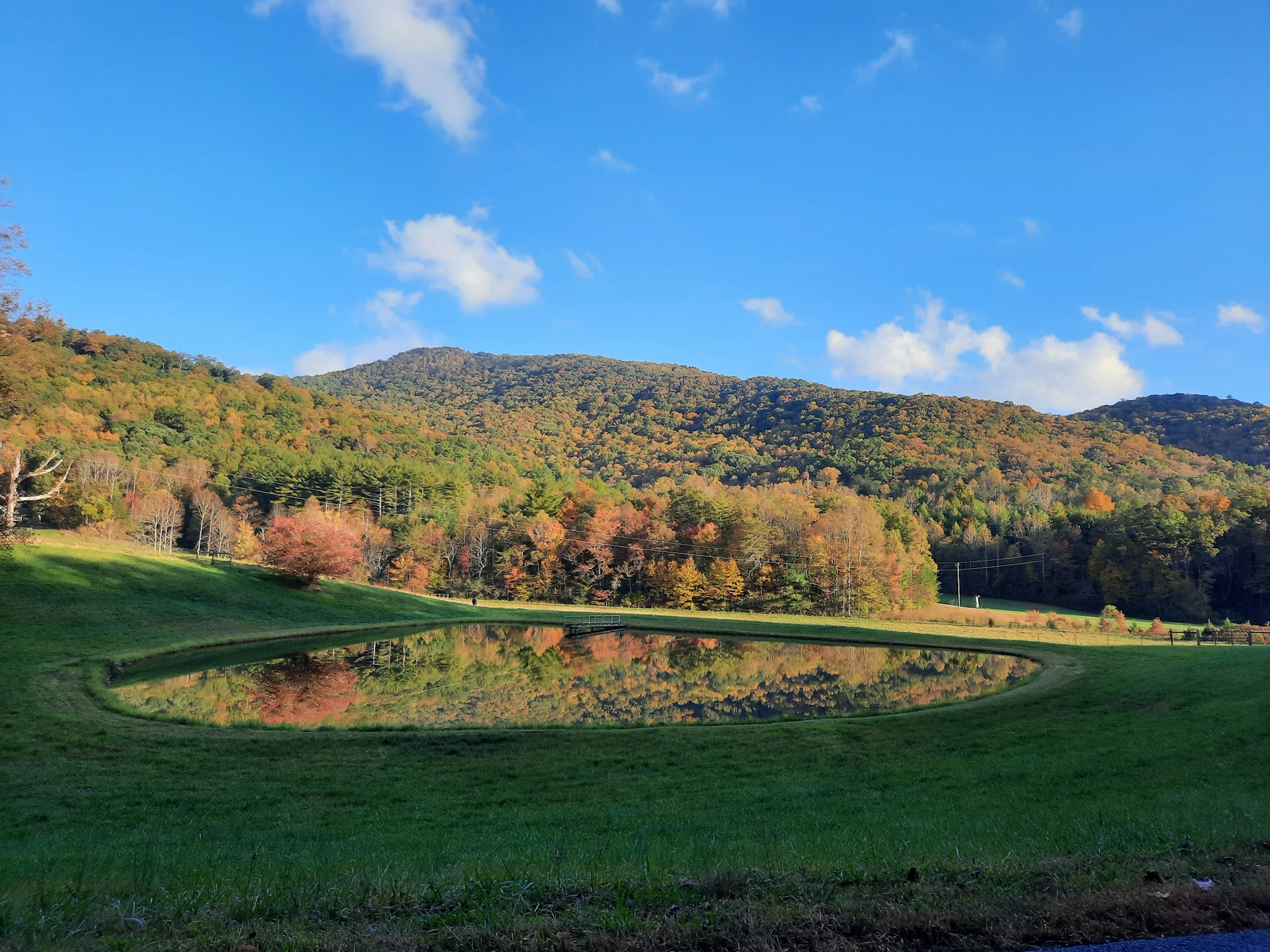
The regulations say so plainly. Under 26 CFR § 1.1031(a)-1(c)(2), someone who is not a dealer may swap “city real estate for a ranch or farm… or improved real estate for unimproved real estate.” That same passage clears a leasehold with 30 years or more left to run.
I’m Thomas Echea, a Blue Ridge real estate agent and Principal of E+E Group at Compass, and I own a home here myself. Around Fannin County the trade I watch succeed most often is a tired cabin into raw acreage, or acreage into a building on East Main Street.
What does Georgia add for land buyers?
One covenant worth checking before closing on acreage. Conservation use assessment taxes qualifying tracts on current use value instead of market value, capped at 2,000 acres per owner, under O.C.G.A. § 48-5-7.4.
The commitment runs ten years. An owner who breaks it generally must “pay back to the taxing authorities twice the savings they have received over the life of the covenant,” plus interest, with narrow statutory carve-outs for eminent domain, death, and certain age or disability cases.
Watch that acreage ceiling this fall. Georgia HR 32 puts a constitutional amendment on the November 3, 2026 ballot that would lift the single-owner cap from 2,000 acres to 4,000. It is not law yet, so 2,000 governs today.
Ask the Fannin County Board of Tax Assessors at 400 West Main Street, Suite 102 in Blue Ridge whether a covenant sits on the parcel. That call takes five minutes and has saved buyers five figures.
What does not qualify?
Four buckets, and one catches investors constantly. Section 1031(a)(2) says the rule “shall not apply to any exchange of real property held primarily for sale.” That is the dealer exclusion, and buying to resell is precisely its target.
| Asset | Eligible? | Reason |
|---|---|---|
| Cabin with booking history | Yes | Productive use in a business |
| Acreage held for appreciation | Yes | Investment purpose |
| Storefront or office | Yes | Trade or business use |
| House bought, renovated, relisted | No | Inventory under § 1031(a)(2) |
| Your residence | No | Personal, neither business nor investment |
| Equipment, vehicles, artwork | No | Removed after December 31, 2017 |
| Units in a multi-member LLC that owns a tract | No | A partnership interest is not realty |
| A villa in Costa Rica | No | Foreign ground fails § 1031(h) |
How long should you hold it?
Long enough that the paperwork shows investment intent, which in practice means two years rather than five. No provision sets a bar, so proof carries the argument. Leases, deposits, a Schedule E, and dated bookings establish purpose. A fast resale undercuts it regardless of what anyone said at closing.
Two years is the figure practitioners circle for good reason. Section 1031(f)(1) uses that window for related parties, and the IRS safe harbor for dwellings measures 24 months on each side. Neither binds an ordinary rental trade. Together they mark where the Service stops asking.
None of this is tax advice, and your basis, entity, and history all move the answer. Bring in a credentialed CPA and a qualified intermediary before listing. Mechanics and deadlines live in how a 1031 exchange works when you sell a rental. Personal-use math for cabins is in 1031 exchanges for vacation rentals. Annual carrying costs appear in Fannin County property taxes.
Frequently asked questions
Can a 1031 exchange be done on commercial real estate?
Yes. A commercial building held for productive use in a trade or business sits squarely inside Section 1031(a)(1). It is also like-kind to a rental house, raw land, and farmland, since all domestic realty shares one class.
Can you buy multiple properties in a 1031 exchange?
Yes. One departing asset may be replaced by several, and several by one, provided each arrival gets held for business or investment. The constraint is the identification timetable, not the count.
Is there a 5-year rule for a 1031 exchange?
No. Section 1031 sets no minimum holding period. Section 121(d)(10) creates a five-year window during which the residence exclusion cannot be claimed on a house acquired through a swap, and that is where the number originates.
Does raw land qualify for a 1031 exchange?
Yes, when held for investment rather than resale. 26 CFR § 1.1031(a)-1(c)(2) treats improved and unimproved parcels as like-kind for anyone who is not a dealer in real estate.
Can you 1031 into a property in another country?
No, not starting from a domestic asset. Section 1031(h) provides that real property located in the United States and real property located outside the United States are not property of a like kind.
Does a house flip qualify?
No. Section 1031(a)(2) excludes any exchange of real property held primarily for sale. Renovate-and-resell inventory is the textbook illustration.
Do conservation covenants affect a Georgia land purchase?
They can. Under O.C.G.A. § 48-5-7.4 the commitment runs ten years and covers up to 2,000 acres per owner, and breaking it generally means repaying twice the tax savings received plus interest, subject to narrow exceptions. Confirm covenant status with the county before closing.